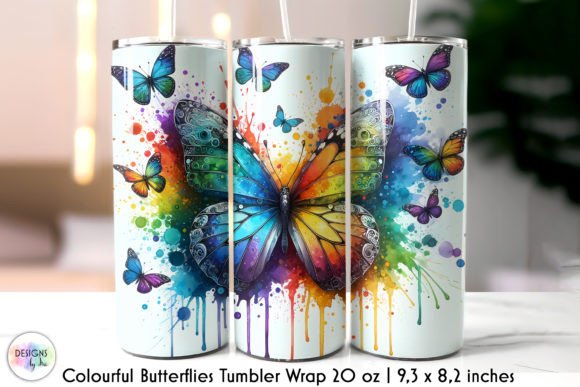
Watercolour Rainbow Butterflies Tumbler
A Soft, Joyful Impression—Before the Needle Even Touches Fabric
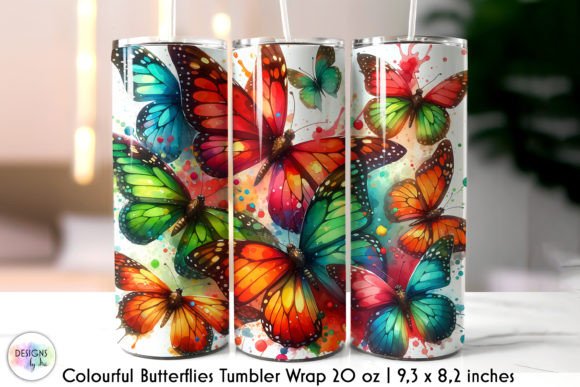
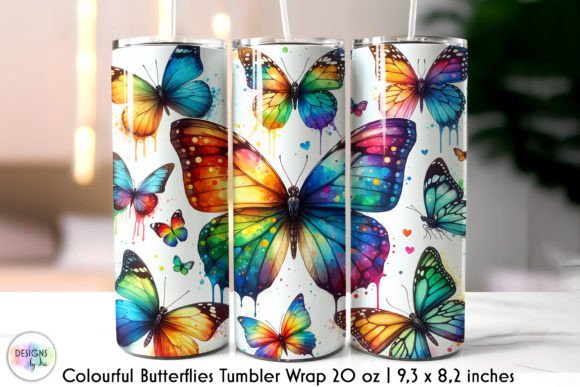
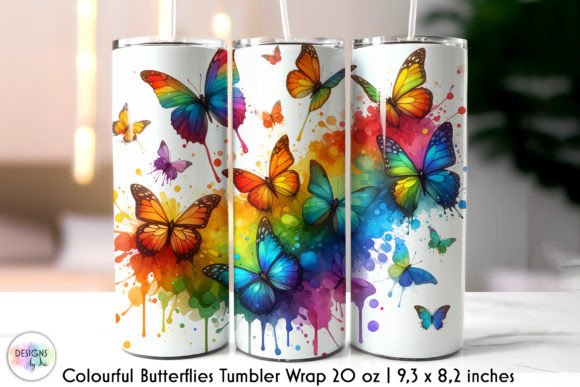
The first thing that strikes me about Watercolour Rainbow Butterflies Tumbler is its gentle confidence. It doesn’t shout—it glows. The watercolour texture gives it breathing room, and the butterflies float with lightness, not clutter. There’s no rigid symmetry or sharp vector edge here; instead, soft washes of colour bleed just enough to feel hand-painted, not pixel-perfect. That’s a huge plus for embroidery designers who want to avoid that “too clean, too digital” look on handmade products. I immediately pictured it stitched onto a linen tea towel for a spring boutique launch—not as a bold statement, but as a quiet moment of delight when someone reaches for their morning cup.
Where This Design Truly Belongs (and Where It Doesn’t)
This isn’t a design built for dense fill-stitch coverage or tight satin borders. Its strength lies in subtlety: think baby onesies with delicate butterfly wings peeking from a shoulder seam, lightweight cotton aprons for herbalists or bakers, or pillow covers where the watercolour softness complements natural fibre textures. I recently tested a similar mood on a custom embroidered tote bag for a local florist—and customers consistently paused to admire the “painterly” quality, not just the subject. That’s the magic of Watercolour Rainbow Butterflies Tumbler: it elevates the handmade product without competing with it.
But be honest with yourself—this isn’t ideal for high-contrast sweatshirt embroidery on heavy fleece. The fine watercolour gradients won’t translate cleanly in dense fill stitch, and small wing details may blur if stitch density isn’t carefully managed. It also needs thoughtful placement on curved surfaces like caps or tumblers themselves—those gentle edges can warp or stretch unpredictably without precise hooping and stabilisation.
Real Embroidery Considerations—Beyond the PNG File
Remember: you’re receiving PNG files—not SVG or embroidery-ready formats. That means this is a graphics asset, not a machine embroidery design out of the box. If you plan to digitise it for actual stitching, treat it like a sketch, not a blueprint. Start by testing the layout on scrap fabric at your intended scale. Check how those soft edges hold up in satin stitch versus running stitch outlines. Ask yourself: do the butterflies read clearly at 3–4 inches tall? Does the rainbow palette stay distinct on heather grey or navy fabric—or does it mute into indistinct lavender and teal?
I always run a black-and-white mockup first. Why? Because embroidery thread rarely matches screen RGB perfectly—and what looks vibrant on your monitor might stitch as muddy olive and dusty rose. With Watercolour Rainbow Butterflies Tumbler, contrast matters more than usual. A light fabric background helps preserve the airiness; dark fabrics will demand careful thread selection and possibly added underlay to keep the design legible.
Fabric & Finish: Texture Is Your Co-Designer
This design sings on smooth, stable weaves—cotton poplin, medium-weight linen, even tightly woven tea towels. But tread carefully on textured knits, slubbed yarns, or loosely woven gauze. Those watercolour washes rely on visual continuity, and uneven fabric surfaces break that flow. On stretchy fabric? Only with firm cutaway stabiliser and reduced tension—otherwise, the soft contours will distort mid-stitch. And for anything that’ll face frequent washing (baby items, kitchen towels), confirm your thread and stabiliser combo holds up through multiple cycles without puckering or fading.
One note on commercial use: since this is delivered as PNG graphics—not licensed embroidery files—verify usage rights before selling finished embroidered goods or bundling it into digital embroidery kits. Etsy sellers and craft business owners should treat this as raw design inspiration unless the seller explicitly grants commercial embroidery rights.
What It Adds to Your Product—And What It Asks of You
Watercolour Rainbow Butterflies Tumbler quietly lifts perceived value. It reads as intentional, artistic, and considered—not mass-produced. That builds trust with customers who pay a premium for handmade authenticity. When used well, it supports brand consistency for makers focused on gentle, nature-inspired aesthetics—think botanical apothecaries, mindful parenting shops, or slow-living lifestyle brands.
But it asks something back: attention. You’ll need to choose stabiliser thoughtfully (tear-away for stable wovens, cutaway for knits), test thread colours across light/dark backgrounds, and resist over-digitising fine details. Don’t force every watercolour stroke into satin stitch—sometimes a simple running stitch outline + strategic fill works better than chasing photorealism.
Practical Designer Notes—No Guesswork Allowed
- Always test on scrap fabric first—especially with your exact thread, stabiliser, and machine settings.
- Review stitch density if digitising: low-to-moderate density preserves the airy feel; high density flattens the watercolour illusion.
- Confirm hoop size compatibility—the 9.3 × 8.2 inch dimensions suggest it’s best suited for larger hoops (5×7 inch minimum), not tiny 3×3 setups.
- Inspect small details at actual stitch size—wing veins, antennae, and colour transitions must remain legible, not fuzzy.
- Compare light and dark fabric backgrounds using printable mockups—don’t assume the rainbow palette behaves the same on oatmeal vs. charcoal.
- Use proper stabiliser—lightweight cutaway for knits, medium tear-away for wovens, and consider topping for napped fabrics.
- Check licensing before selling finished embroidered items or reselling as part of a digital embroidery bundle.
Final Thought: A Design That Rewards Intention
Watercolour Rainbow Butterflies Tumbler isn’t flashy—but it’s memorable. It works best when paired with intention: the right fabric, the right stitch strategy, the right customer. It’s perfect for the Etsy seller who values storytelling over saturation, the boutique owner curating seasonal gifts, or the embroiderer building a signature style rooted in softness and wonder. Just remember—it’s a starting point, not a finish line. Your skill, your choices, and your care are what turn this lovely graphic into a cherished handmade product.